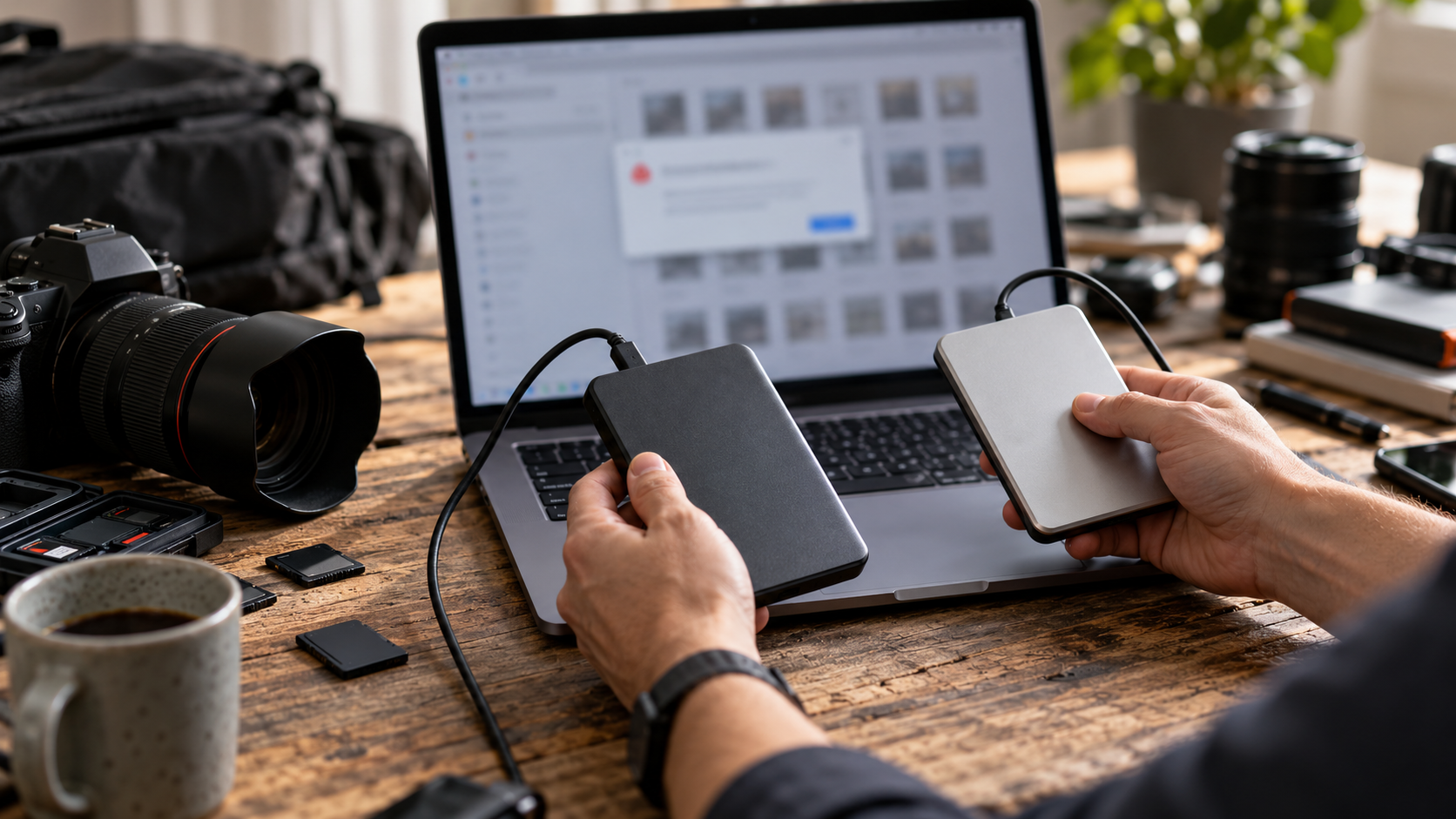
Troubleshoot without damaging evidence
When an encrypted release will not open, preserve the original container, software version, error state and recovery context before experimenting. Work on a verified copy, change one variable at a time and avoid unverified repair tools that may expose the archive or overwrite metadata.
After a system update, a photographer sees an unsupported-container message. The original drive is set aside, a hash-verified copy is used for testing, the product version and account state are recorded, and official support guidance is consulted without sending real releases or passwords.
Use a controlled sequence
- 01Stop repeated writes and preserve the original archive and affected device state.
- 02Record the exact error, software version, operating system and last known successful access.
- 03Verify the file hash and test only a copy in a controlled environment.
- 04Check credentials, supported versions, storage health and official documentation separately.
- 05Escalate with sanitized logs and restore from a known-good backup when appropriate.
Record the decision without copying the risk
Log incident time, reporter, archive identifier, original hash, error text, environment, changes attempted, result, backup used, disclosure risk and final resolution.
Stop and investigate when
- A repair tool asks for the archive password or identity documents.
- Testing modifies the only surviving copy.
- The proposed fix is a password reset assumed to decrypt historical files.
Storage protection is not legal authorization
Does not replace provider permissions, guaranteed backup, password recovery or enterprise identity management. Model-release requirements vary by intended use, platform, contract and jurisdiction. Obtain qualified advice for legal conclusions.
Questions commercial photographers ask
Should I upload the archive to a public repair service?
No. Use approved support paths and sanitized evidence; do not expose real releases or identity attachments.
What if the original is corrupted?
Preserve it, investigate storage health and use a verified recovery copy. Qualified forensic or legal help may be necessary.
Evidence for this decision
These sources support specific handling decisions. They do not provide universal legal advice or imply endorsement.